COAT & CARE
Schnauzer Colors: Black, White, Salt & Pepper, and Patterns
Compare coat appearances, understand why registry standards differ, and know what a puppy photograph can—and cannot—confirm.
PepperWhisker editorial
Start with appearance, then check the documents
Searching for a black or white Miniature Schnauzer is a reasonable starting point, but a coat description is only one part of choosing a dog. Photographs show appearance under particular lighting and grooming conditions. They cannot establish ancestry, a color genotype, registration, health, or adult size.
The owner-supplied photographs below illustrate visible coat appearances. They are not availability listings or certificates of a particular color. Ask for the registry's recorded description and supporting documents for the individual puppy before making a decision.
Dark coats and solid black
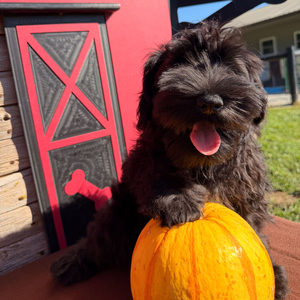
Illustration: a predominantly dark coat in outdoor light. The photograph alone does not confirm a registered solid-black classification.
Solid black is one of the colors allowed by the American Miniature Schnauzer Club's published breed standard. When comparing dark puppies, request clear views of the face, chest, sides, and legs. Ask whether the seller is using an informal description or the wording on registration paperwork.
Black and silver: contrasting areas
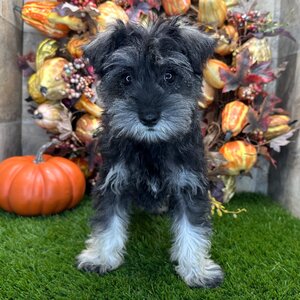
Illustration: a dark body with visibly lighter beard and leg hair; the puppy's official color is not verified here.
The American standard also recognizes black and silver, with a dark body and defined lighter areas. A pale beard by itself is not enough to identify this pattern. Review the complete dog and its records instead of making the classification from one facial close-up.
Salt and pepper: mixed shades
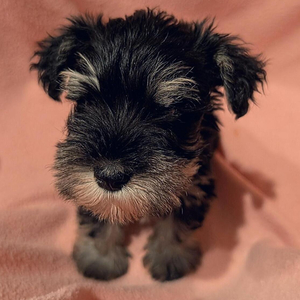
Illustration: dark and light facial hair. This close-up does not establish a salt-and-pepper classification.
Salt and pepper, the third color in that standard, includes mixtures of light and dark hairs and can range in overall shade. Compare descriptions carefully: a seller may call a puppy gray without specifying its registered color. These three American-standard descriptions come from the American Miniature Schnauzer Club.
White: the registry matters
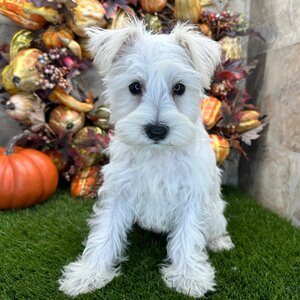
Illustration: a white-looking coat. Registration and ancestry must be checked separately.
White is included in the Royal Kennel Club's Miniature Schnauzer standard, but not in the American standard cited above. A breed standard describes the ideal for that organization; meeting a show standard and possessing registration documents are different questions. Ask which registry and which event or purpose a claim concerns.
White patches and patterned coats
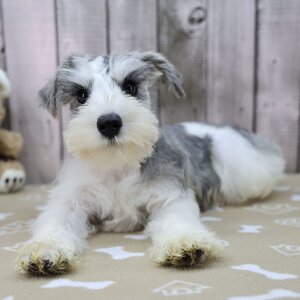
Illustration: gray and white areas. This image does not identify a merle gene or certify a named pattern.
Terms such as parti, merle, chocolate, or rare need more explanation than a photograph. Ask what the description means, which registry records it, and whether any genetic claim has supporting evidence. Do not infer breeding rights or show eligibility from an advertisement.
Choose the puppy beyond its color
Keep your decision order practical: suitable breed and adult size, documented background, health information, individual behavior, then appearance. Our breed comparison and paperwork guide help with those checks. For actual availability, use the puppy profiles, where the individual dog's information belongs.
Explore individual puppy profiles and ask about the information that matters to your household.
Meet our puppies